



Call Us
+86-573-86451918
Email Us
mangerzw@haxsen.com

Why Are Hydraulic Pipe Fittings Critical for System Integrity and Performance?
In modern fluid power systems, reliability and efficiency hinge on seemingly small components. Among them, Hydraulic Pipe Fittings play an indispensable role in ensuring leak-free connections, vibration resistance, and long-term durability under extreme pressures and temperatures. This article explores the technical landscape, manufacturing precision, and application-specific demands of these essential connectors, while highlighting how specialized manufacturers contribute to industrial advancement.
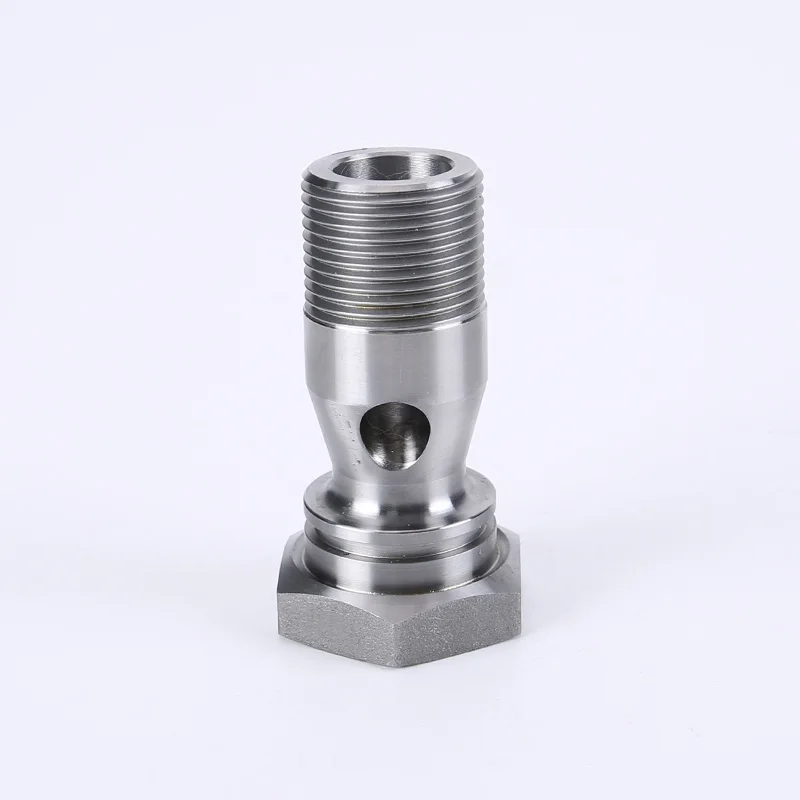
Understanding the Role in Fluid Conveyance
Fluid power systems—whether in construction equipment, mining machinery, or metallurgical plants—depend on a network of hoses, tubes, and pipes. At every junction, Hydraulic Pipe Fittings must create a seal that withstands dynamic loads, pressure spikes, and corrosive media. Unlike general-purpose connectors, these components are engineered with precise thread geometries, surface finishes, and material grades to match specific hydraulic fluids and operating environments.
Key Functional Requirements
Pressure containment from low-pressure returns to ultra-high-pressure circuits is essential. Fatigue resistance must endure millions of pressure cycles without loosening or cracking. Corrosion protection against rust, pitting, and chemical attack from hydraulic oils or water-glycol mixtures is mandatory. Thermal stability maintains sealing force across temperatures ranging from sub-zero to elevated levels.
Common Failure Modes Prevented by Quality Fittings
Thread galling and seizure due to improper plating or material mismatch can be avoided. Leakage from out-of-tolerance sealing surfaces is eliminated. Crack propagation from poor heat treatment or micro-inclusions in raw material is prevented. Vibration-induced loosening without adequate locking features is countered.
Manufacturing Processes That Define Premium Hydraulic Connections
The journey from raw steel billet to a finished fitting involves multiple precision steps. Unlike conventional fasteners, Hydraulic Pipe Fittings demand tighter dimensional tolerances and stricter process controls. Manufacturers specializing in hot die forging, CNC machining, and integrated quality management systems deliver superior consistency.
Hot Die Forging vs. Other Forming Methods
Hot die forging produces a refined grain structure, eliminating internal voids and improving impact strength. This method is particularly suited for complex shapes like SAE split flanges, transition joints, and high-stress hose fittings. By contrast, casting or cold heading may introduce porosity or limit geometry complexity, making forging the preferred route for demanding hydraulic applications.
Secondary Operations and Surface Treatments
Precision CNC turning and milling achieve thread classes 6H/6g or finer. Zinc plating, zinc-nickel, or trivalent chromate provides corrosion resistance. Special coatings such as Dacromet or Geomet are applied for high-temperature or marine environments. Thread gauging and pressure testing are performed on critical batches.
Industry Applications: Where Reliability Is Non-Negotiable
From underground mining to offshore port machinery, hydraulic circuits face severe conditions. The choice of fittings directly influences uptime, safety, and total cost of ownership. Below is a comparison of application environments and the corresponding demands placed on hydraulic connectors.
| Application Field | Typical Operating Conditions | Critical Fitting Property |
|---|---|---|
| Metallurgy & Construction | High ambient heat, dust, vibration | Thermal stability, abrasion resistance |
| Mining Machinery | Impact loads, abrasive slurry, moisture | Toughness, corrosion protection |
| Petrochemical | Aggressive fluids, wide temperature ranges | Chemical compatibility, leak integrity |
| Engineering Machinery | High pressure cycles, mobile equipment | Fatigue life, secure locking |
| Port & Transportation | Salt spray, continuous operation | Galvanic corrosion resistance, durability |
Each sector demands not only standardized fittings but often custom-engineered solutions. For instance, transition joints that connect metric threads to British Standard Pipe (BSP) or SAE O-ring ports require precise adaptation without compromising flow or seal integrity.
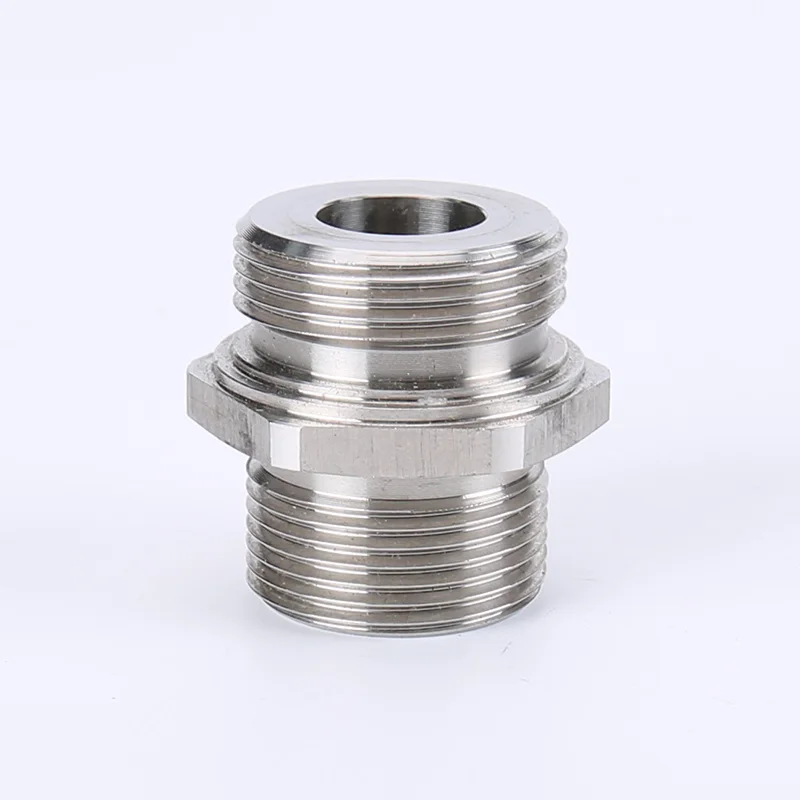
Material Selection: The Foundation of Long-Lasting Hydraulic Components
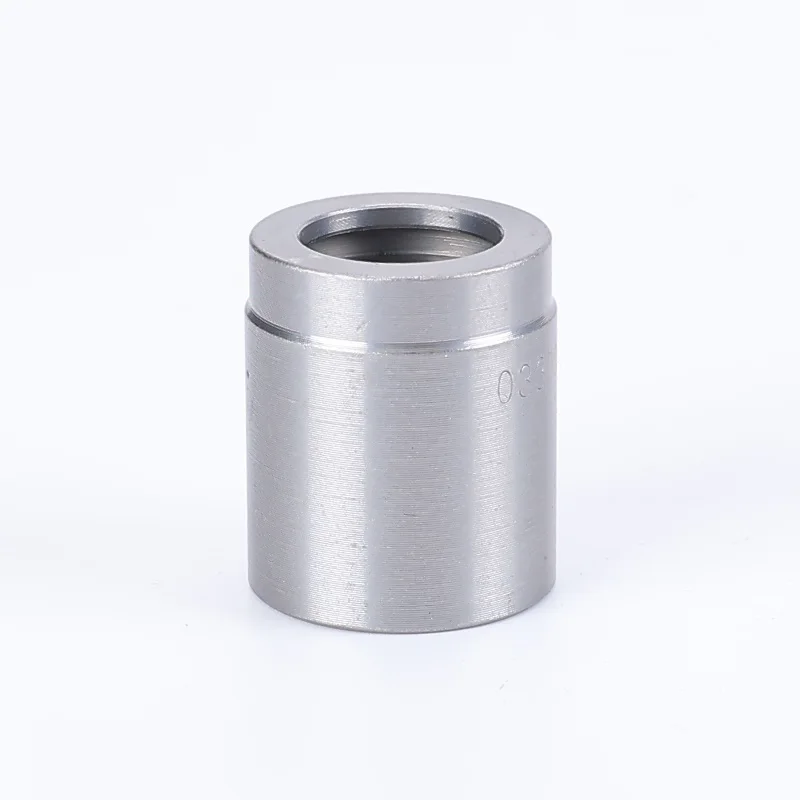
Carbon steel, stainless steel, and brass each serve distinct roles. High-grade carbon steel with proper heat treatment provides cost-effective strength for general hydraulic systems. Stainless steel grades are reserved for corrosive or sanitary environments. The choice of raw material directly affects the fitting's ability to resist hydrogen embrittlement, stress corrosion cracking, and galling during assembly.
Importance of Traceability and Mill Certification
Reputable manufacturers maintain strict material traceability from steel mill to finished product. This ensures that chemical composition, tensile strength, and hardness meet specifications such as ISO 898-1 or ASTM A105. Without this control, even a well-machined fitting can fail prematurely under pressure.
Quality Assurance and Standards Compliance
Global standards such as SAE J518 (code 61/62 flanges), ISO 8434-1 (24° cone connectors), and DIN 2353 provide frameworks for interchangeability and performance. However, meeting these standards is only the baseline. Advanced manufacturers implement in-process inspections, including eddy current testing for surface defects on forged blanks, coordinate measuring machine (CMM) verification of critical dimensions, leak testing under simulated operating pressures, and salt spray testing to validate coating integrity.
Such protocols ensure that each batch of Hydraulic Pipe Fittings delivers consistent sealing and structural performance, reducing field failures and warranty claims.
The Advantage of Integrated Manufacturing: From Raw Material to Finished Component
A fragmented supply chain—where forging, machining, heat treatment, and plating are done by different vendors—often leads to quality gaps, longer lead times, and higher costs. Integrated facilities that control the entire production flow offer distinct benefits. Shorter production cycles without inter-vendor logistics delays are achieved. Lower manufacturing costs through optimized material utilization and energy efficiency become possible. Streamlined quality supervision across every transformation step is established. Faster design iterations for custom or semi-custom components are enabled.
This model is particularly valuable for hydraulic transition joints and SAE flanges, where dimensional accuracy from forging to final machining determines sealing success.
Innovations Shaping the Future of Hydraulic Connection Technology
Industry trends toward higher pressures (up to 800 bar in some systems) and compact machinery drive continuous improvement in fitting design. Developments include non-hexagonal wrenching geometries for weight reduction, pre-applied dry sealants for consistent torque-tension relationships, hybrid fittings combining metal-to-metal and elastomeric sealing, and integrated sensor ports for condition monitoring in smart hydraulic systems.
As systems become more digitized, the humble hydraulic fitting must evolve without compromising its primary mission: leak-proof, fatigue-resistant connection.
Selection Criteria for Engineers and Maintenance Teams
Choosing the right fitting goes beyond matching thread sizes. Engineers should evaluate working pressure relative to fitting pressure rating while maintaining a safety margin. Compatibility with tube material and wall thickness must be checked. Seal type such as O-ring, metal-to-metal, flat face, or tapered thread requires consideration. Installation torque and required assembly tools need to be specified. Accessibility for inspection and re-tightening in confined spaces should be assessed.
A well-chosen fitting reduces the risk of leaks, minimizes downtime, and enhances overall system safety.
Supplier Capability: Beyond Basic Component Production
While many workshops can produce simple hose nipples or adapters, truly reliable Hydraulic Pipe Fittings originate from suppliers with technical depth. Capabilities such as in-house tooling design, metallurgical analysis, and failure investigation separate parts suppliers from engineering partners. Furthermore, a supplier that maintains finished goods inventory of standard configurations—while being agile for custom orders—provides operational flexibility to equipment manufacturers and maintenance depots.
The Role of Personalization in Industrial Components
No two hydraulic systems are identical. Therefore, the ability to deliver personalized solutions—whether a special flange offset, a non-standard thread form, or a unique coating—adds significant value. Manufacturers that embrace modular design and flexible manufacturing cells can respond to such requests without prohibitive lead times or minimum order quantities.
Summary of Best Practices for Hydraulic Connection Integrity
To maximize service life and safety, system designers and maintenance professionals should always verify pressure and temperature ratings before installation. Compatible seal materials such as NBR, FKM, or HNBR must be used for the fluid type. Correct torque using calibrated tools should be applied to avoid under- or over-tightening. Fittings must be inspected for thread damage, plating flaking, or dimensional distortion before assembly. Replacement of fittings after component replacement is necessary if threads show any galling or deformation.
These simple but effective measures significantly reduce unplanned hydraulic failures.
Industry Perspective: Why End-to-End Quality Control Matters
Transition joints, SAE split flanges, and precision hot die forgings are not commodities. Their performance directly affects productivity and safety in mining, metallurgy, and petrochemical plants. A manufacturer that controls raw material selection, forging parameters, heat treatment cycles, and final inspection under one roof delivers consistent results that external assemblers cannot match. This integrated approach also enables faster root-cause analysis when a deviation occurs, preventing recurring issues.
Meeting and Exceeding Customer Expectations in a Dynamic Market
Industrial users today demand more than a catalog of parts. They seek long-term reliability, technical support, and continuous improvement. Manufacturers that embrace a service philosophy—responding to emerging needs such as tighter leakage limits or environmentally friendly coatings—build lasting partnerships. The ability to not only meet but exceed performance expectations requires a culture of rigorous testing and open feedback loops with field engineers.
Concrete Example: A Manufacturer Committed to Quality and Integration
One notable exemplar in this field is Haxsen (Zhejiang) Seiko Technology Co., Ltd. (formerly Haiyan Huajun Forging Hardware Factory). Located in Junyuan Industrial Park, Haiyan County, Jiaxing City, Zhejiang Province, this enterprise specializes in a comprehensive range of fluid connection solutions, including transition joints, hose fittings, precision hot die forgings, SAE split flanges, and accessories for engineering, mining, and automotive machinery. Their products serve metallurgical construction, mining, petrochemical, port machinery, and transportation sectors worldwide.
What distinguishes Haxsen is its one-stop service model—from raw material to finished product. By managing every phase internally, the company shortens production cycles, reduces costs, and maintains rigorous quality supervision. This integration ensures that each hydraulic fitting leaving their facility meets strict dimensional and performance criteria. The company operates under the service tenet of “improving product quality, keeping pace with the times, meeting and striving to exceed customer expectations,” providing personalized high-quality services to users across industries. For engineers seeking consistent, reliable Hydraulic Pipe Fittings, Haxsen represents a capable and dedicated manufacturing partner.
Send Inquiry



X
We use cookies to offer you a better browsing experience, analyze site traffic and personalize content. By using this site, you agree to our use of cookies.
Privacy Policy
News
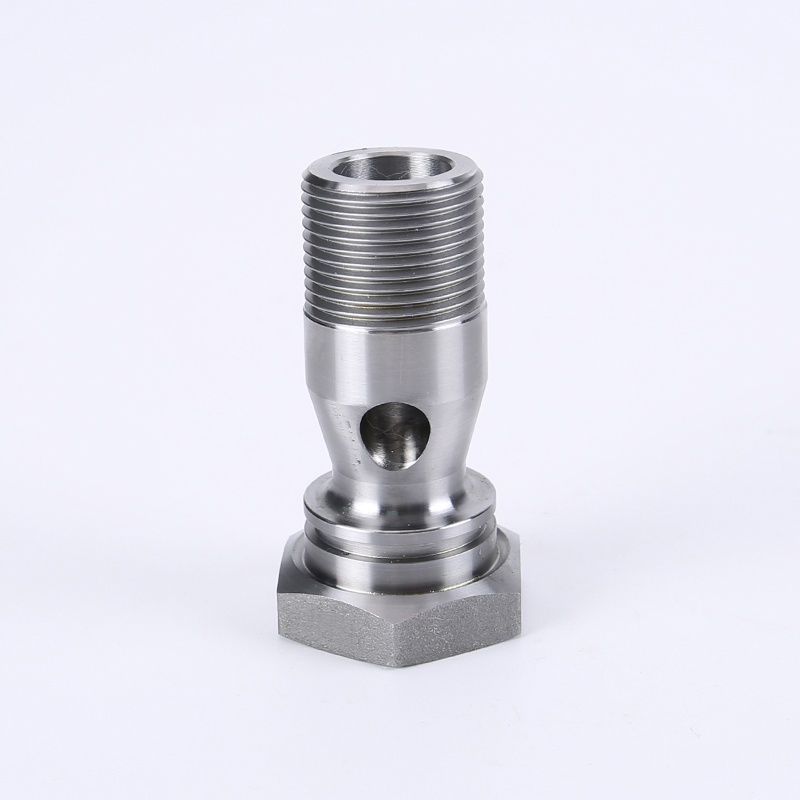 What is Hydraulic Pipe Fitting?2025/07/29
Hydraulic Pipe Fitting is a type of connecting component used to connect various pipelines, hoses, and other components in hydraulic systems. They are often constructed of stainless steel, carbon steel, or brass and can endure high pressure, high temperature, and corrosive environments, assuring the......
 What are the main advantages of precision die forging over ordinary die forging?2024/03/08
The forging machining allowance is small, the tolerance is small, the surface roughness value is small. It can partially or completely replace the machining of parts, so it saves materials...